Red Light Therapy
Ten minutes of 660 nm red and 850 nm near-infrared light in a private cabin. No heat, no UV, no cold.
What it is
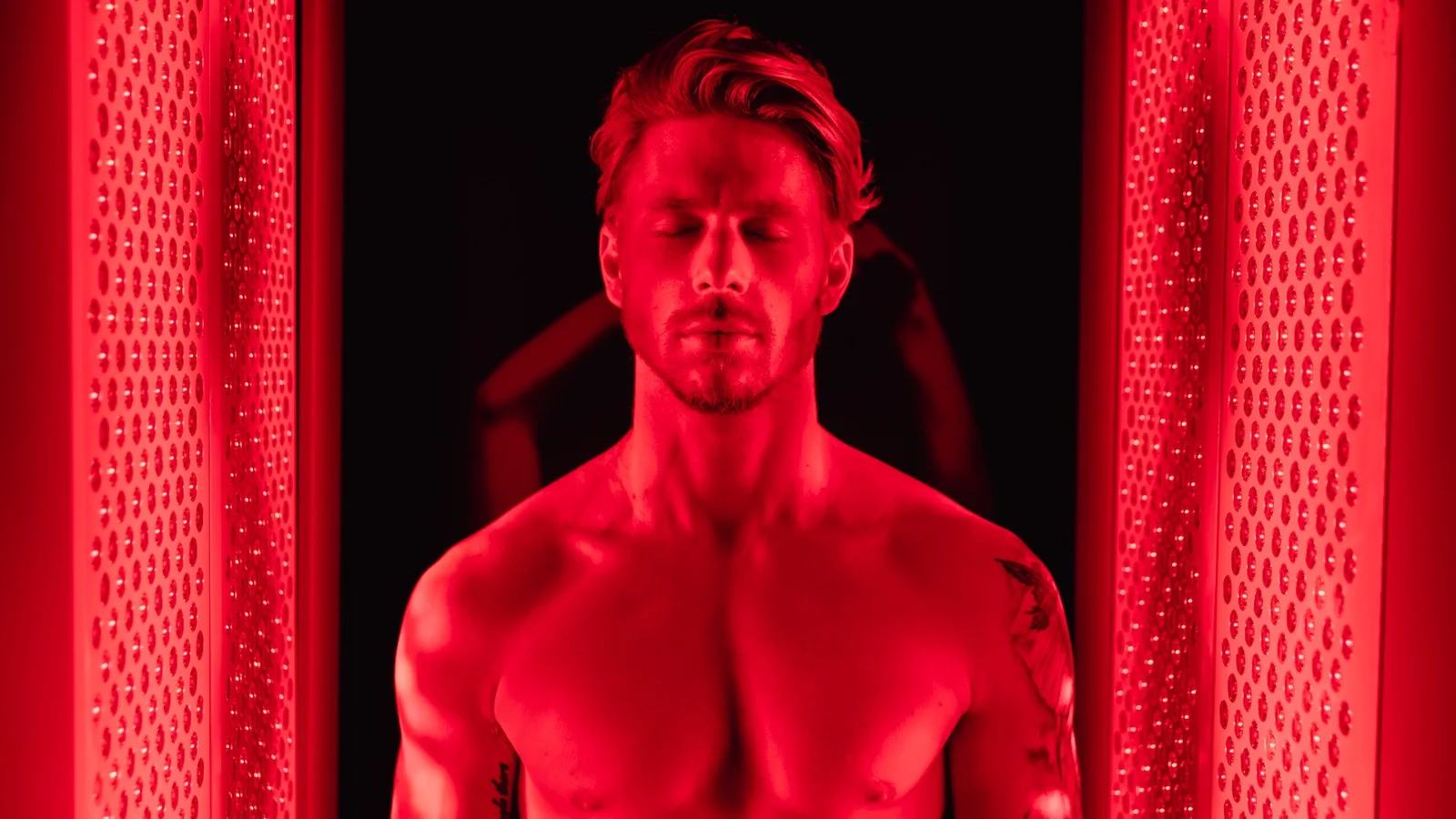
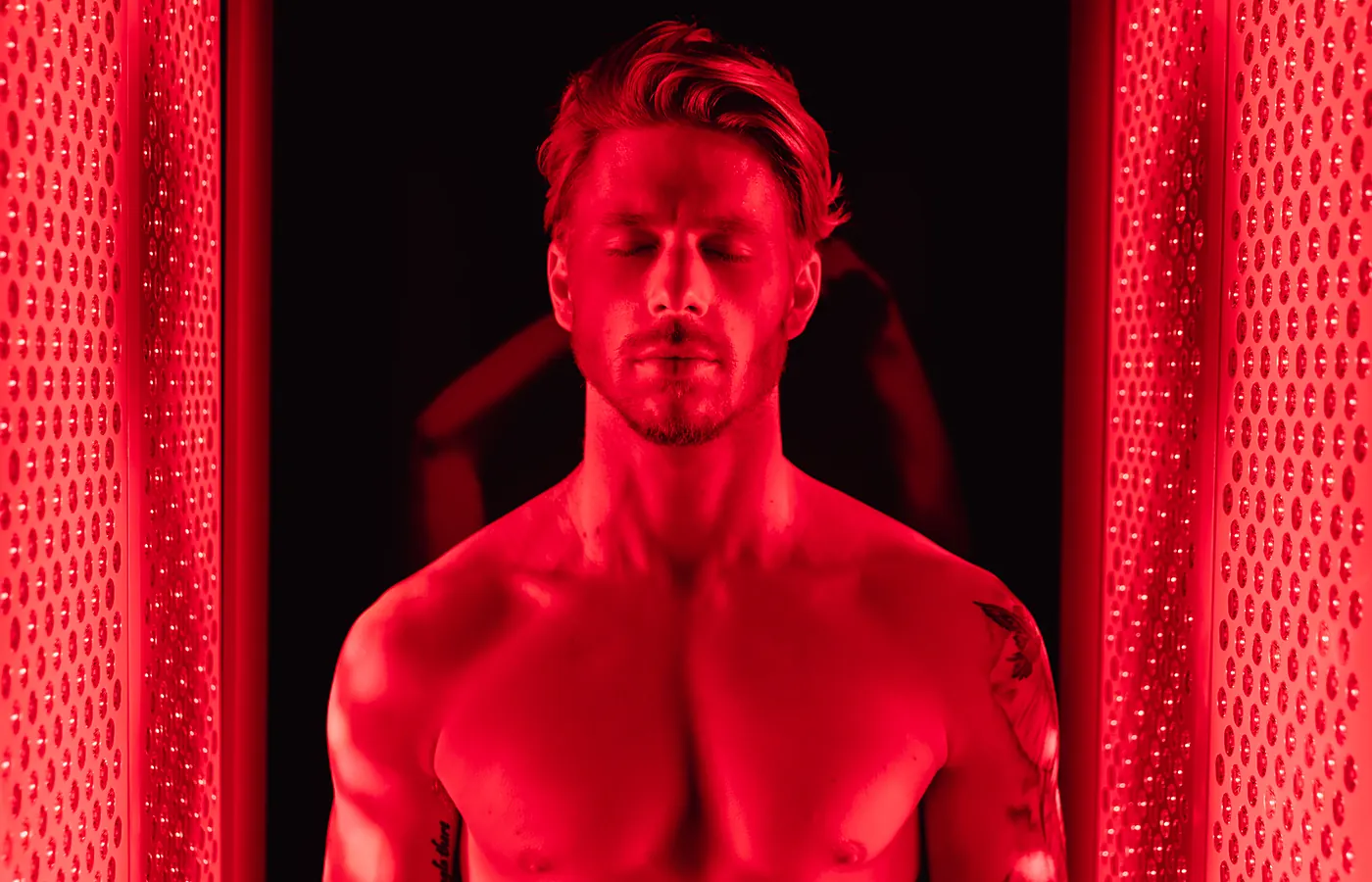
Red light therapy exposes your skin to red light at 660 nm and near-infrared light at 850 nm. It is not a heat lamp and there is no UV. You stand in a private cabin with full-length panels either side, and it feels like very little: warm, quiet, extremely bright.
Because the panels run full height, one ten-minute session covers front and back. Most members book it as the calm counterweight to cryo.
Why people use it
Skin
The most studied use of red light. Commonly used in skincare for tone, texture and fine lines.
After training
Frequently used alongside training for muscle recovery and post-exercise soreness.
Consistency
Red light is cumulative. It rewards regularity far more than intensity, which makes it easy to build into a week.
Ten quiet minutes
Alone, in a private cabin, with your phone somewhere else.
How a session works
Take your cabin
Sessions are private and the cabin locks from the inside.
Undress to your comfort level
Light only does something on skin it reaches. Most people go down to underwear or less.
Choose the setting
All Red at 660 nm, near-infrared at 850 nm, or both together.
Ten minutes
Five minutes facing in, five facing out is the usual split.
Done
No cool-down, no shower, no downtime. Get dressed and go.
What to bring
As little as you are comfortable with. The cabin is private. Eye protection is available and we recommend it if bright light bothers you; otherwise keeping your eyes closed is enough. Never look directly into the panels.
Book your red light session.
Add-ons
Sensate
- A small device that rests on your chest and uses infrasonic resonance with audio to slow your nervous system down. Pairs well with the ten quiet minutes in the cabin.
What we know.
What we don’t.
Reasonably established
- 660 nm and 850 nm are the wavelengths most used in photobiomodulation research.
- Skin and wound-healing applications have the strongest research base.
- There is no UV involved, so there is no burn and no tan.
Still open, or simply not true
- Results depend on dose, distance and consistency, and protocols across studies vary widely.
- It is not a treatment for medical skin conditions.
- Claims that go beyond skin and recovery are still emerging science, and we treat them that way.
Safety & screening
Red light therapy has few contraindications, but there are a handful of things worth checking before your first session.
- A photosensitive condition, such as lupus or polymorphic light eruption
- Medication that increases light sensitivity, including some antibiotics, retinoids and St John’s wort – check the leaflet or ask your pharmacist
- A personal or family history of skin cancer – speak to your doctor first
- Pregnancy – ask your doctor
- Recent laser treatment, peels or other skin procedures – wait until you are cleared by whoever treated you
- Do not look directly into the panels
This list is a starting point, not medical advice. Freezlab does not diagnose or treat medical conditions. When you create an account you also confirm a general health declaration, which covers this list plus a few blanket conditions that apply to every session: any infectious disease, any chronic or acute illness in the last six months, and medication that affects your alertness or fitness to drive. If you are being treated for anything, ask your doctor before you book.
Red Light questions
Reset. Recover.
Repeat.
Amsterdam, inside the Olympic Stadium. Open early, open late, and built for people who want to keep going.
Olympisch Stadion 36, 1076 DE Amsterdam
Mon–Fri 07:00–21:00 · Sat–Sun 09:00–17:00